

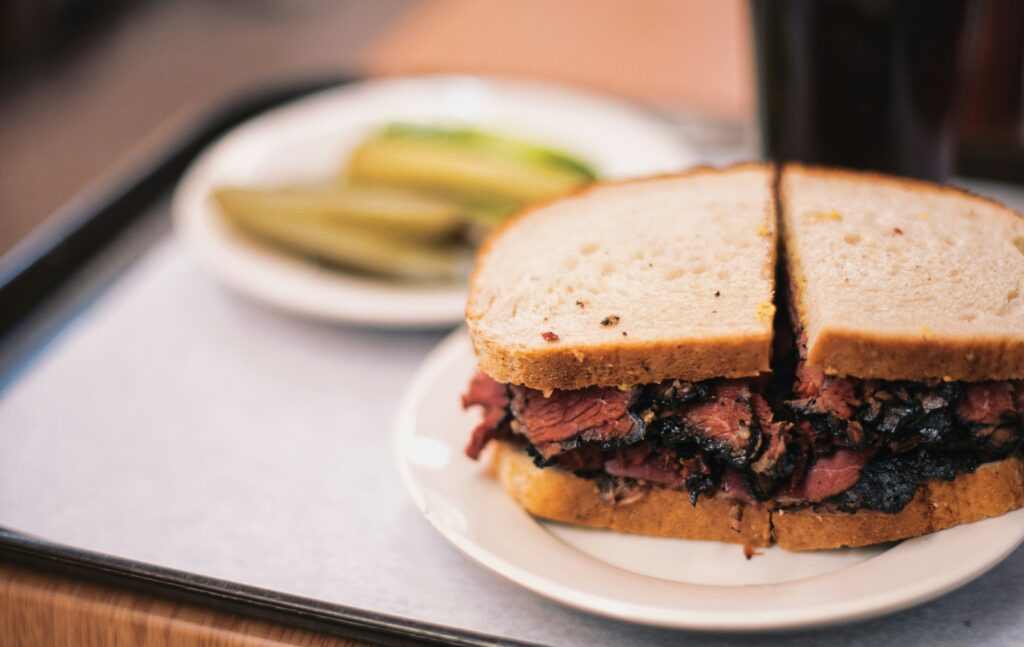

Few things are more New York than a Jewish Deli. You’ll find hand-carved pastrami, hot roast dinners, matzo ball soup, chopped chicken liver, Dr. Brown’s soda, dill pickles, knish, noodle kugel—well, the list goes on and on and on. Much of the deli culture of New York during the turn of the 20th Century spilled over into North Jersey, bringing the Kosher delights to this side of the river.
Between 1880 and 1920, around 2.5 million Jewish immigrants came to the US and about 1.5 million of them settled in New York and North Jersey. In the late 1800s, hundreds of thousands of Jewish and non-Jewish German immigrants crossed the Atlantic. With them, they brought many of their staples from home and opened up shops around the city that they labeled “Delikatessens,” which translates to “delicacies” in German. There was a mix of Kosher and non-Kosher shops among this diaspora.
Things like pickles, beef frankfurters and herring were popularized in these stores.
The Origins of Pastrami
Eventually, the king of Jewish deli cuisine arrived in New York when Yiddish-speaking Jewish immigrants brought pastrami to the states—a dish originating in Romania. In Romania, pastrami, or as it was called, “pastirma,” was often made with goose breast, but beef was adopted due to its low price in New York. The name pastrami eventually formed, most likely due to a blending of dialects and the already established (and rhyming) word, “salami.”
Pastrami is synonymous with deli culture today and is probably the first thing that comes to mind when you think of a Jewish deli: “Is the pastrami any good?”
The Evolution of the Jewish Deli
By 1920, the number of Jewish residents living in New York and New Jersey had continued to grow and with it, Jewish delis became more and more popular.
Katz’s Deli—often considered the gold standard of Jewish delicatessens—opened in 1888, but it wasn’t until 1917 that it began to shape into what we know today with its hand-carved pastrami, late hours, and bright lights. The decades that followed saw a boom in deli culture.
It was around this same time that Jewish delis began opening around pop culture hubs in New York. They morphed from quick, counter-service joints to the sit-down spots that we know them as today. The menus continued to expand, and dining at a Jewish deli suddenly became synonymous with the glitz and glamor of the Big Apple.
Today, you’ll find many of these legendary delis dispersed throughout the city. There are plenty of kosher options as well as “Jewish-style” delis—places preparing many of the staples, but without limiting the menu to only Kosher items.
Baltimore, Pittsburgh, Chicago, and Los Angeles also saw the popularity of Jewish delis rise during the 20th Century.
Jewish Delis in New Jersey
Here in New Jersey, institutions like Hobby’s Delicatessen—a favorite before Devil’s games—and Harold’s opened their doors during the middle of the century. Harold’s was made famous for their comically large sandwiches, piled high with corned beef, pastrami, turkey, and more.
Since, New Jersey has had its fair share of legendary delis, many of which are still piling the pastrami high today.
Harold’s New York Deli – Edison
Harold’s is a NJ institution. The Jewish deli is famous for its sandwiches that are piled half a foot high (sometimes more). Owner Harold Jaffe used to run Carnegie Deli in Midtown Manhattan—no wonder Harold’s is so good.
Radin’s Delicatessen – Cherry Hill
House-smoked pastrami, corned beef, chopped liver, kishka (meal sausage), and a variety of smoked fish are the lifeblood of Radin’s in Cherry Hill. Chef Russ Cowan’s commitment to old-school techniques and deli classics earned him recognition as a James Beard Semi-finalist in 2026.
Deli King of Clark – Clark
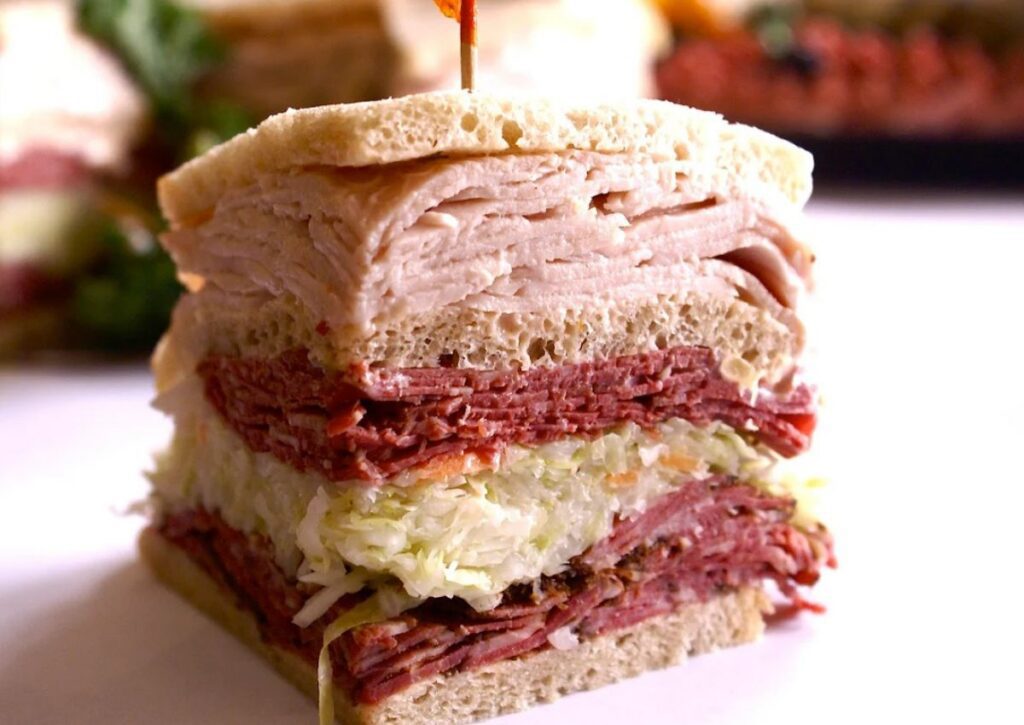
In Clark, NJ is Deli King. The kosher deli is doing pastrami sliced thin and served with some truly excellent coleslaw. Not in the mood for traditional Jewish fare? Try the French Dip, which is the best in jersey.
Eppes Essen – Livingston
Try the stuffed derma at Eppes Essen in Livingston, NJ or any of their other classic, Jewish bites. Need a Shiva platter? They have that too.
Mikki & Al’s Noshery – Montclair
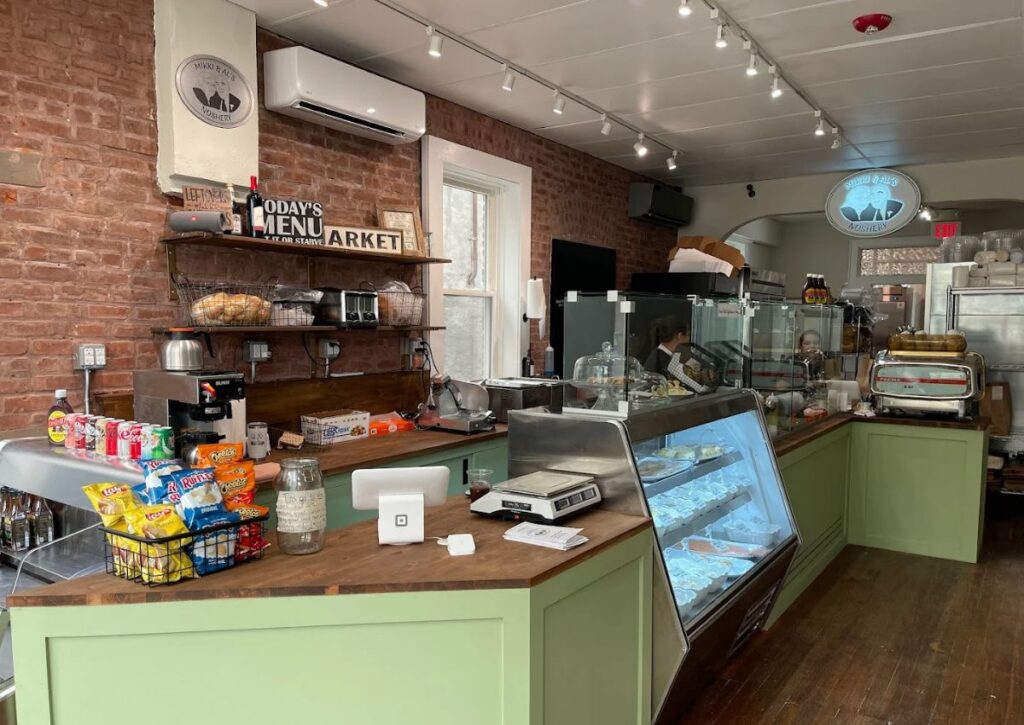
Not as big and bright as some of the other options, but Mikk & Al’s does deli food right. The Jewish-style (not kosher) spot dishes out all the classics including an incredibly flavorful matzo ball soup.
Town Hall Deli – South Orange
Town Hall Deli has been open since 1927, making it one of the oldest in NJ. The delicatessen is famous for inventing the NJ-style sloppy joe—a sandwich consisting of meat (usually turkey, roast beef, pastrami or corned beef), coleslaw and Russian dressing. Today, you can find this delicacy at almost any Jewish deli in Jersey.
Richard’s Deli – Long Branch
In Long Branch is another great deli option. Richard’s is a Jewish deli serving excellent knish, roast beef sandwiches, corned beef and a killer breakfast spread.
Hobby’s Delicatessen – Newark

Hobby’s has the bright lights and glamor of a New York deli. Located in the heart of Newark—just a few blocks from Prudential Center—Hobby’s is a go-to spot for Devils and Seton Hall fans before a big game.
The Kosher Nosh Deli – Glen Rock
Sloppy Joes, Cel-ray soda, pickles, prepared goods—what more could you want from a kosher deli? Try the roast chicken that is on special every Friday.
Grossman’s Deli & Grill – Oakhurst
The hot pastrami on rye flows at this Oakhurst Jewish deli. Grossman’s also serves some exceptional (non-kosher) breakfast sandwiches on freshly baked poppy Kaiser rolls. Yum.
Pastrami Grill Bistro – Garfield
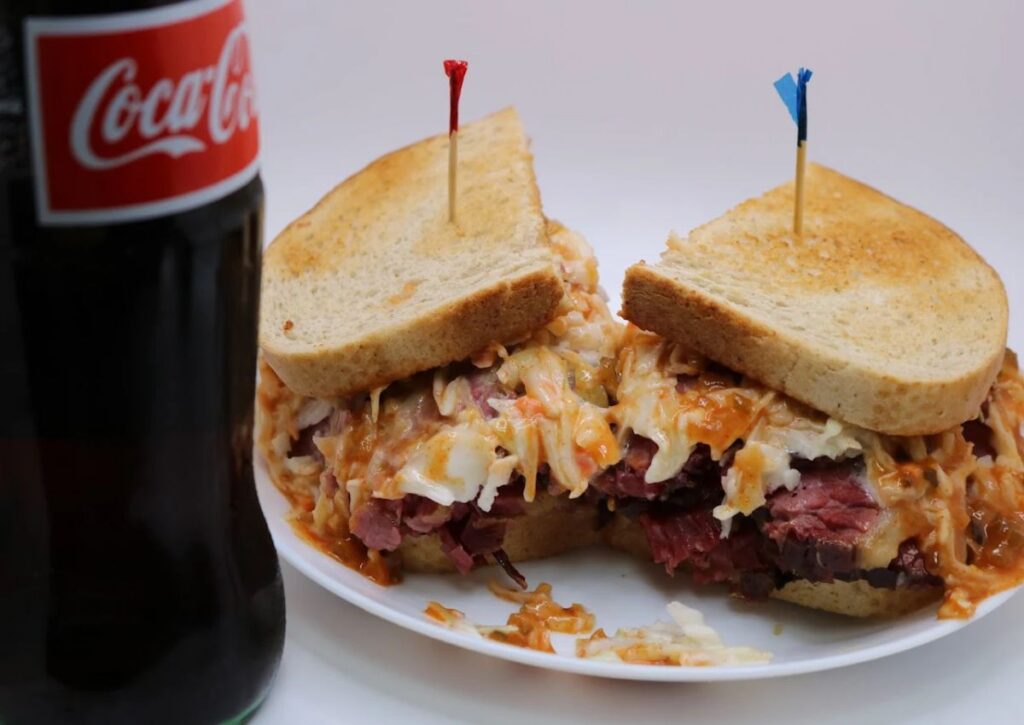
This Garfield spot is hand-carving pastrami and corned beef that looks (and tastes) eerily similar to the famous Katz’s in the Lower East Side. That’s because much of the Pastrami Grill staff came directly from the Houston Street deli.
Fred and Murry’s Kosher Delicatessen – Freehold
This 100-percent kosher deli in Freehold has all of the usual favorites. The hand-cut fries and smoked pastrami are very popular here. Originally in Brooklyn, Fred and Murry’s came to New Jersey in the 80’s.

Peter Candia is the Food + Drink Editor at New Jersey Digest. A graduate of The Culinary Institute of America, Peter found a passion for writing midway through school and never looked back. He is a former line cook, server and bartender at top-rated restaurants in the tri-state area. In addition to food, Peter enjoys politics, music, sports and anything New Jersey.
