

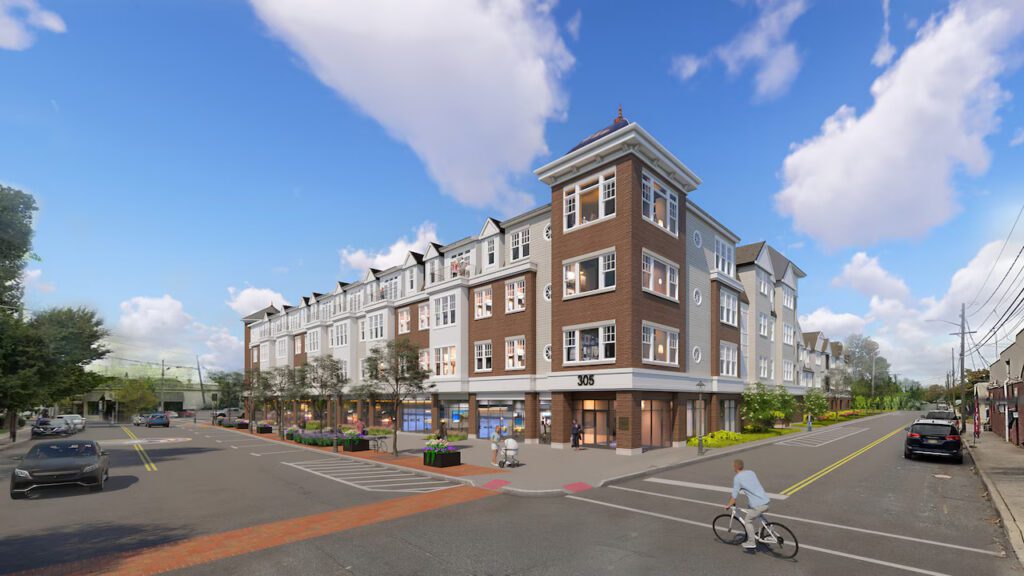

For more than a century, Long Branch has been chasing a version of itself it lost. The Elbie, breaking ground now on Broadway, is the latest—and perhaps most deliberate—attempt to finish that comeback.
There is a version of Long Branch that most New Jerseyans have never seen. Not the Long Branch of beach tags and boardwalk fries, but the Long Branch that once drew presidents. Ulysses Grant summered here. So did James Garfield, Chester Arthur, and seven other commanders-in-chief. At its peak in the late 1800s, Long Branch was the most glamorous resort destination on the entire East Coast—a place where the Gilded Age came to exhale.
Then came the casinos, the decline, the fires, the slow unraveling of a city that couldn’t quite figure out what it wanted to be next. Asbury Park—Long Branch’s scrappier neighbor to the south—eventually got the revival story, the record stores, the national press coverage. Long Branch kept rebuilding, block by block, without ever getting full credit for it.
That context matters when you look at what just broke ground at 305 Broadway.
What The Elbie actually is
Downeaster Development and TANTUM Real Estate have begun construction on The Elbie, a 78-unit mixed-use rental building that city leaders have identified as a cornerstone investment in the Lower Broadway Corridor—a stretch of Long Branch that sits between its downtown core and its beachfront, close enough to both to feel like neither.
That in-between quality is exactly what the project is designed to resolve. Positioned across from Slocum Park and the recently renovated Long Branch Public Library, The Elbie is explicitly intended to stitch downtown to the shore—not just physically, but in the way the street feels when you walk it.
The building, designed by Rotwein + Blake Associates, rises four stories along Broadway before stepping down to three stories along Sixth Avenue, a deliberate architectural concession to the residential neighborhood it borders. It’s a detail that signals something about the intention behind this project—that it was designed to fit into Long Branch rather than announce itself over it.
The comeback Long Branch keeps building toward
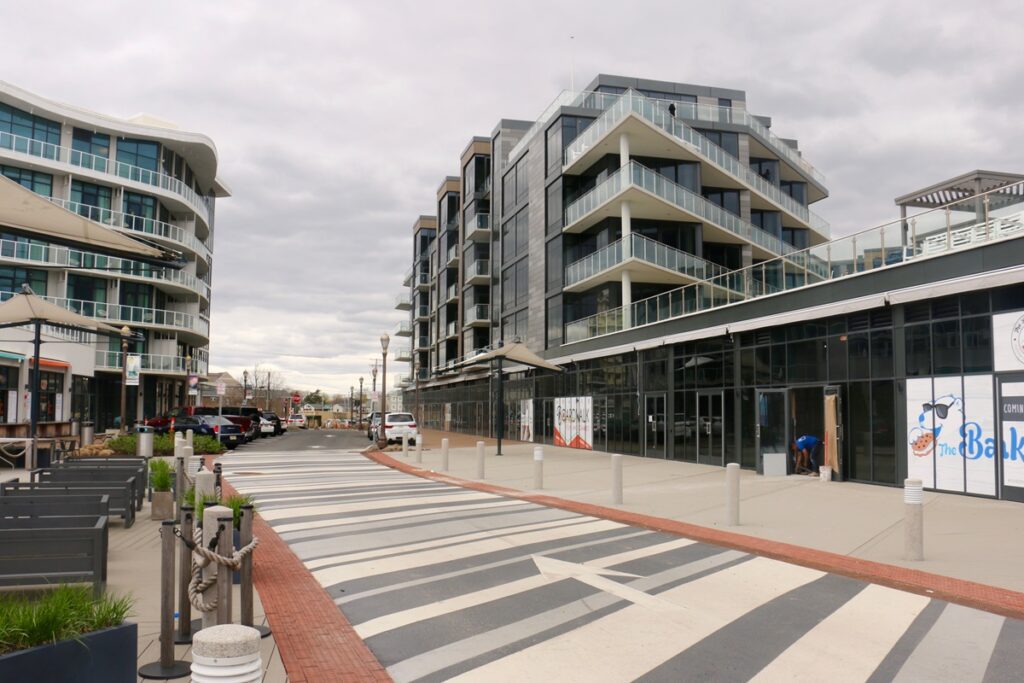
Long Branch’s modern revival didn’t start with The Elbie. It started more than two decades ago, when a controversial redevelopment effort in the Beachfront North section cleared older properties to make way for new construction — a process that generated significant controversy and legal battles at the time. What emerged eventually was Pier Village, a mixed-use development along the oceanfront that brought restaurants, retail, and a more polished aesthetic to a stretch of waterfront that had seen better decades.
Pier Village worked. It drew people back to the shore in Long Branch and demonstrated that the city could support the kind of amenity-rich environment that younger renters and residents increasingly expect. But Pier Village is on the water. Broadway—the spine that runs from downtown toward the beach—remained a work in progress, with gaps in activity that made the walk feel longer than it was.
The Lower Broadway Corridor has been identified by city leaders as a priority investment zone—a recognition that connecting downtown to the beachfront is still unfinished business, even after years of development activity closer to the shore.
The Elbie is the most significant piece yet placed in that gap. Its location across from Slocum Park puts it at a natural gathering point, and the planned streetscape enhancements—including an enhanced crosswalk featuring the Long Branch city seal, new landscaping, and a clock tower at the park corner—suggest an ambition that goes beyond the building’s footprint.
Inside the building: what residents will actually get
The amenity package at The Elbie reads less like a standard apartment checklist and more like a deliberate response to how people actually live now. The ground-floor lobby will include a lounge alongside work-from-home infrastructure—individual privacy pods and open collaborative spaces—built into the building’s entry sequence rather than tucked away as an afterthought.
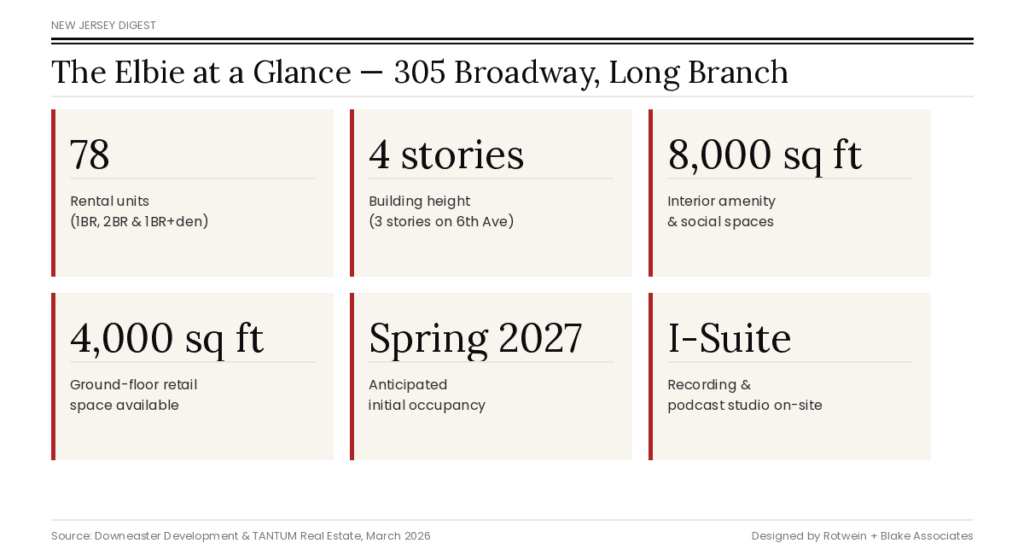
The recording studio stands out. It’s the kind of amenity that signals a specific demographic target—remote workers, creatives, people who have left the city but haven’t given up the urban texture of their lives. Long Branch, with its train access to Manhattan and its underpriced oceanfront proximity by New York metro standards, has been attracting exactly that profile of resident for years. The Elbie is designed with them explicitly in mind.
The piece that ties it together
One element of the project that deserves more attention than it typically gets in development announcements is the stormwater management system being engineered by Dynamic Engineering. Long Branch sits in a coastal zone where flooding and drainage have historically complicated development. An extensive stormwater system designed to minimize impact on surrounding streets is not a glamorous selling point, but it’s the kind of infrastructure investment that determines whether a neighborhood actually functions when it rains—and whether the improvements hold up over time.
The combination of that infrastructure work with the streetscape enhancements along Slocum Park gives The Elbie a civic dimension that purely residential projects often lack. This isn’t just a building being inserted into a block. It’s a deliberate attempt to change what that block does—to make it a place people move through and linger in, connecting two parts of the city that have never quite clicked together the way Long Branch’s geography suggests they should.
Construction is underway. Initial occupancy is anticipated for late spring 2027. For a city with Long Branch’s history—all of its glittering peaks and grinding lows—another building going up on Broadway is not exactly news. But this one is trying to do something specific. Whether it works will say something real about whether Long Branch’s next chapter is finally ready to be written.

Lifelong Jersey resident and Rutgers and FDU alumnus, Tom La Vecchia is publisher of New Jersey Digest, one of the state’s leading lifestyle media brands. When he’s not growing the Digest, he’s raising four kids, wrangling four cats and pretending it’s all under control. His mission: keep Jersey interesting and impossible to ignore.
