


New Jersey municipalities faced a hard deadline this week stemming from a 2024 law: submit a 10-year plan for building affordable housing or face state intervention. Most towns complied, but behind the deadline is a growing battle that’s dividing otherwise picturesque communities.
The deadline requires all 564 municipalities across New Jersey to complete and submit affordable housing plans. It comes front the Mount Laurel Doctrine—a 1970s constitutional ruling that mandates every town provide its “fair share” of affordable housing. For decades, the ruling went largely unenforced. But as the conversation around affordable housing has changed, the doctrine came back into the limelight. Now, with stricter deadlines resulting from the 2024 legislation and a new governor committed to seeing it through, New Jersey is finally getting serious about equitable housing.
Housing advocates see this as a turning point.
The state faces a shortage of roughly 300,000 affordable units, according to WHYY. Over the next decade, tens of thousands of new affordable homes are expected to be built through mixed-use developments—buildings with market-rate units alongside affordable carve-outs—and dedicated affordable housing projects.
But the enthusiasm from state leaders and affordable housing advocates contrasts sharply with the resistance brewing in wealthy communities across the Garden State.
The Growing Feud in Princeton
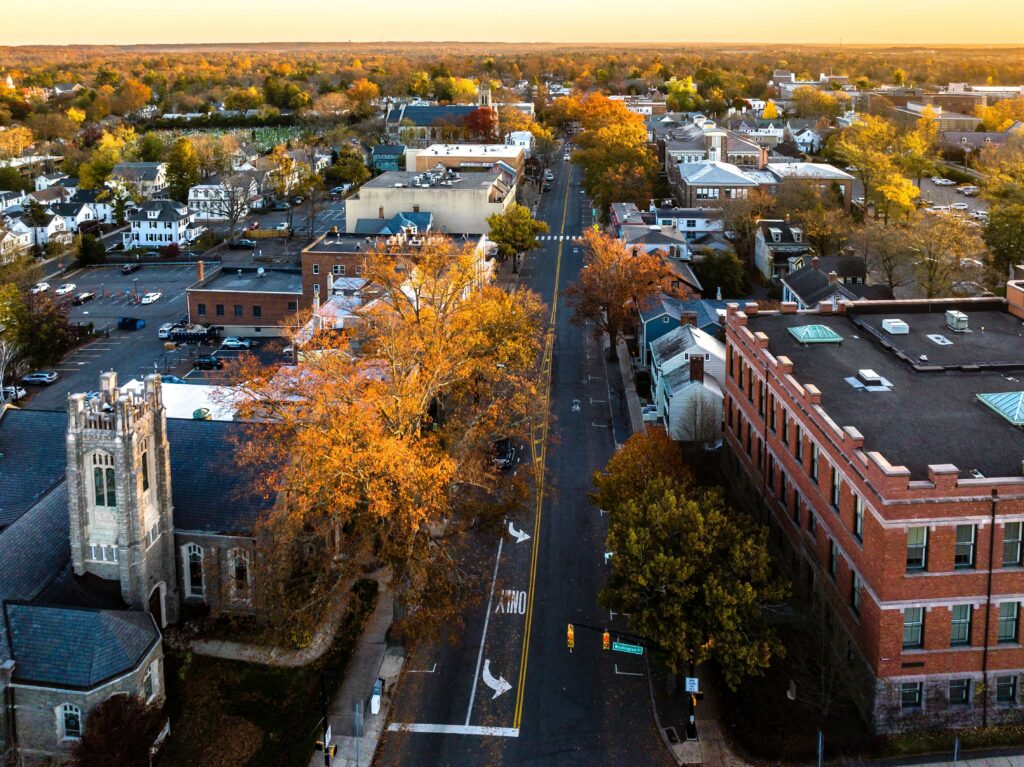
A Washington Post report paints Princeton—an Ivy League town where median home prices hover around $1 million—as a flashpoint.
Princeton’s town council approved plans for new apartment buildings near historic districts, including a 238-unit complex near properties where James Madison and Alexander Hamilton once lived, prompting a fierce response from critics.
Local residents argue the developments will alter historic neighborhoods, increase traffic, and devalue homes. A coalition of prominent historians, including legendary PBS filmmaker Ken Burns, signed a letter opposing one project. Residents throughout town have erected lawn signs reading “Defend Historic Princeton.” Take a drive through the charming town’s more residential areas, and you’ll catch glimpses of these signs throughout. The anger is palpable and real.
But council members supporting the plan counter that this argument can be discriminatory, pointing out that if affordable housing must exist as per New Jersey law, placing it in historic, affluent neighborhoods actually promotes economic integration rather than segregating low-income residents to the outskirts of town. This tension has boiled over into real life. The Post reports that Princeton Councilwoman Mia Sacks alleges she receives angry stares around town, and that some of her neighbors have even stopped talking to her entirely.
The feud in Princeton isn’t isolated. In 2024, several NJ towns sued to block the mandate, arguing it burdens suburban communities. One appeal reached the U.S. Supreme Court last month, but was ultimately rejected.
Most Towns Complied
The mandate wasn’t an issue for all New Jersey municipalities. In fact, most towns—over 400—have already complied.
Some turned to underutilized office parks, shopping centers, and motels as redevelopment sites—allowing them to expedite the construction of affordable units without any neighborhood opposition.
But smaller towns argue they’re being asked to shoulder the NJ housing crisis. Officials in communities with limited land say finding a space for mandated affordable housing is difficult, especially when balancing other municipal needs.
This tension around affordable housing is persistent across much of the country. Many affluent, predominantly white communities have used historically used zoning laws to block the construction of affordable housing, which advocates argue is a form of segregation. The Mount Laurel Doctrine emerged from this reality when Black residents in Mount Laurel brought the argument before the NJ Supreme Court in 1971 after officials blocked affordable housing construction.
Proponents support the current law as a necessary step toward equitable housing, while critics oppose it as an overreach that weakens local control over community.
What Comes Next
With most municipalities now having submitted their plans, New Jersey’s affordable housing implementation will accelerate. Many will build new housing with little pushback. But for towns like Princeton, contention surrounding the mandate is impossible to ignore.
The bottom line is this: the 2024 affordable housing mandate put a stark deadline in place, and Princeton will be seeing hundreds of new units built over the next decade, regardless of local outrage. However, where that housing is built—and what it may look like—can still change.

Peter Candia is the Food + Drink Editor at New Jersey Digest. A graduate of The Culinary Institute of America, Peter found a passion for writing midway through school and never looked back. He is a former line cook, server and bartender at top-rated restaurants in the tri-state area. In addition to food, Peter enjoys politics, music, sports and anything New Jersey.
